5 Common Mistakes When Using AI and How to Avoid Them
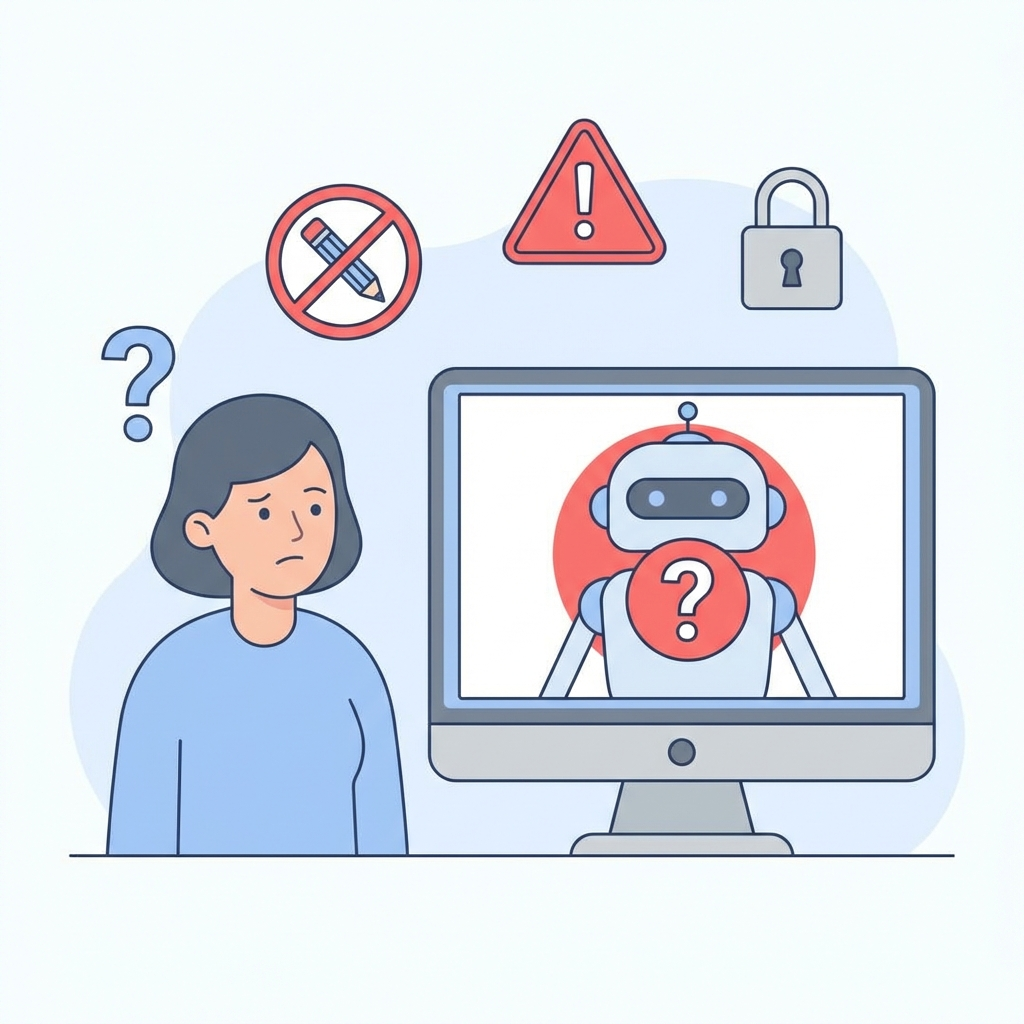
(source by gemini AI)
In short: AI is increasingly becoming a daily work tool—from writing, research, design, to helping operations. But many users get trapped in five classic mistakes. This article breaks down each mistake with real examples, impacts, and prevention steps that you can practice immediately.
Introduction
AI is no longer a technology of the future—it’s already here in chate, emails, design, and data analysis. However, its ease of use often makes people forget: AI is not perfect. It can be wrong, biased, and miss local context if not directed well. This article discusses five common mistakes when using AI and practical ways to avoid them.
1. Assuming AI Always Provides Correct Answers
AI often sounds convincing, even when it’s “making up” details—known as hallucination. For example, citing regulations that don’t exist or concluding data without a basis.
Impact: False content damages credibility, risks legal issues, and leads to wrong decisions.
How to Avoid: Always do a two-step verification. Check facts against official sources (regulations, government sites, journals). Ask AI to state “unsure” if data is not available.
Important: Save a record of “what AI produced” and “what humans verified” to maintain an audit trail.
2. Giving Vague Instructions (Bad Prompt Engineering)
Vague prompts produce generic answers. “Create an article about online business” is too broad—AI doesn’t know the audience, goal, style, or length.
Example:
- Bad: “Make an article about digital marketing.”
- Good: “As a copywriter, write a 1200-word article about online marketing strategies for small businesses. Audience: beginners. Style: simple, practical. Include 3 case studies.”
How to Avoid: Use the SPARK framework (Situation, Role, Audience, Result, Criteria). Be specific about what you want.
3. Ignoring Ethics and Copyright
Using AI to mimic specific works, creating images of public figures without permission, or spreading misleading content. Sometimes unconsciously, AI content mimics the structure or style of certain works too closely.
Impact: Copyright infringement, damage to trust, and negative social impact.
How to Avoid: Be transparent (state “aided by AI” if relevant), check for originality, and always edit to give the content a unique voice.
Note: AI is for efficiency, not deception. Always have a human review before publishing.
4. Fully Relying on AI Without Human Creativity
Copy-pasting AI results without a human touch makes content flat, generic, and lacking brand identity.
Example: A generic AI caption vs a caption with a customer story. The generic one gets low engagement, while the one with a personal story builds connection.
How to Avoid: Add local context, internal data, and a “human layer”. Inject viewpoints, humor, and empathy that AI cannot replicate.
5. Not Understanding AI Limitations and Risks
Thinking AI can replace professionals or is always up-to-date. AI has limitations: it doesn’t always know the latest information, can be biased, and shouldn’t be used for medical/legal/financial decisions without experts.
How to Avoid: Set usage limits. Use AI for drafts, ideas, and summaries; use humans for decisions. Train your team to think critically and verify information.
Practical Checklist for AI Users
- Clear Goal: Define the desired outcome.
- Specific Prompt: Audience, style, length, local examples.
- Verify Facts: Check official sources.
- Ethics & Copyright: Avoid misleading content, give attribution.
- Human Touch: Add stories, internal data, brand style.
- AI Limits: Don’t use for sensitive decisions without experts.
Conclusion
AI speeds up work and opens up ideas. But quality and trust come from how we use it. Avoid these five common mistakes, and AI will become a partner that strengthens creativity, not replaces it. If you are consistent, the result is not just better content, but also a stronger reputation.
Author
Author